Cordoba, Capital of the Caliphs

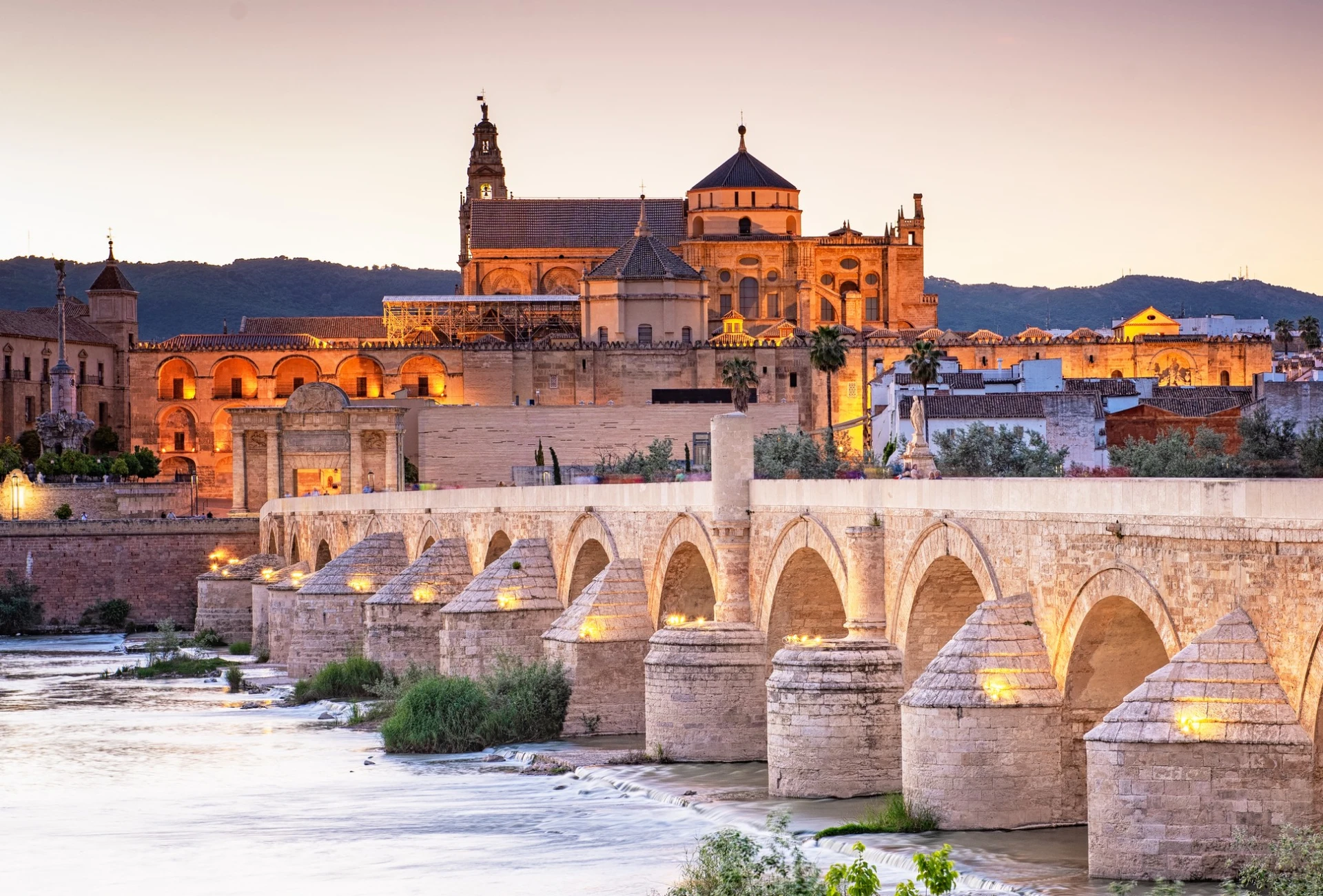
Córdoba stands on the Guadalquivir river in southern Spain. It was the capital of the Roman province of Baetica, where Seneca was born, and from 929 the seat of the Umayyad Caliphate of al-Andalus, when it was among the largest cities in Western Europe. The philosophers Averroes and Maimonides were both born here in the 12th century.

UNESCO lists the Mosque-Cathedral and the historic centre around it as World Heritage, along with Medina Azahara, the caliphs' palace-city 8 km west, and recognizes the May Festival of the Patios as Intangible Cultural Heritage. The Jewish Quarter keeps one of only three medieval synagogues left in Spain. High-speed trains reach Córdoba in about 45 minutes from Seville and 1 hour 45 minutes from Madrid.

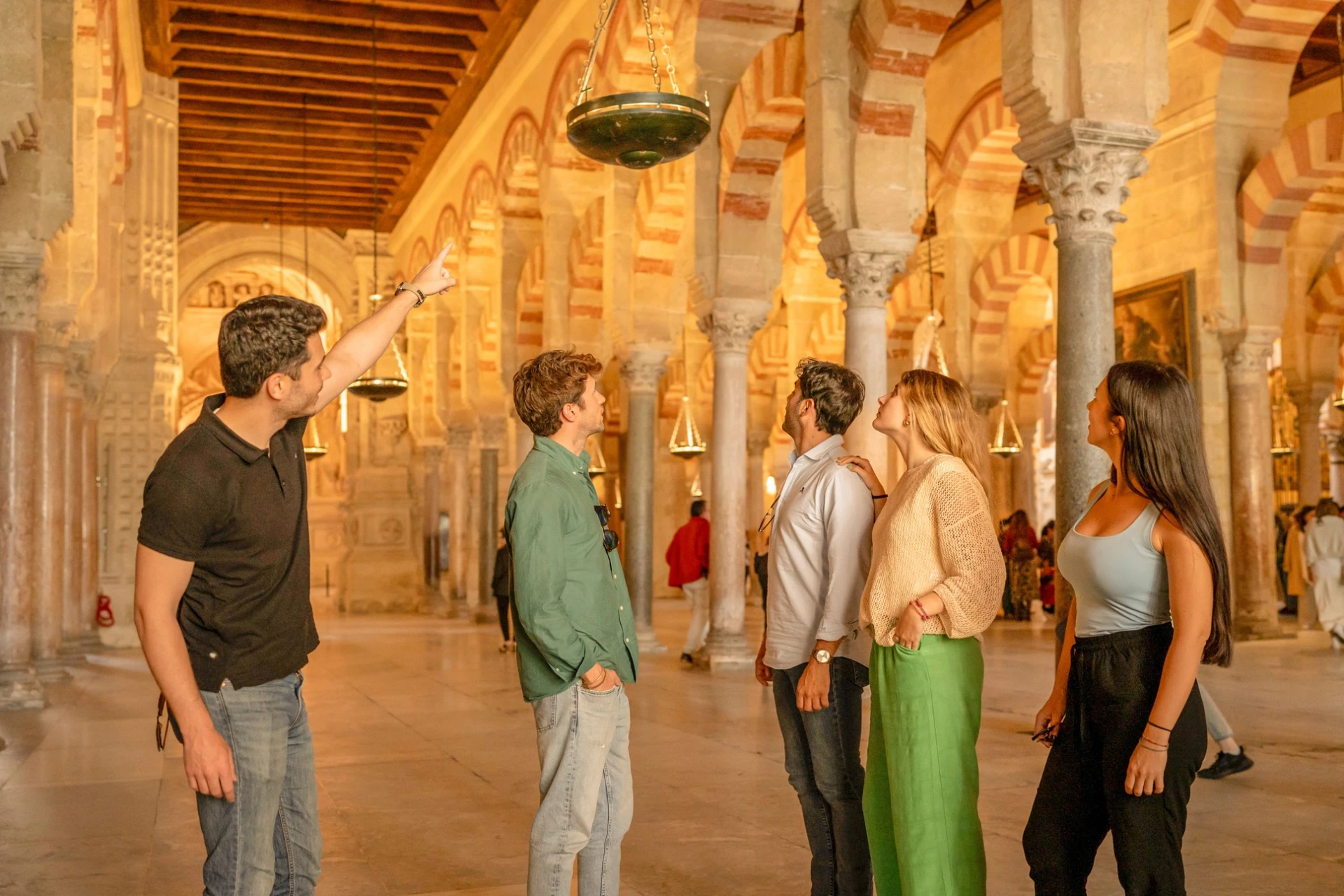
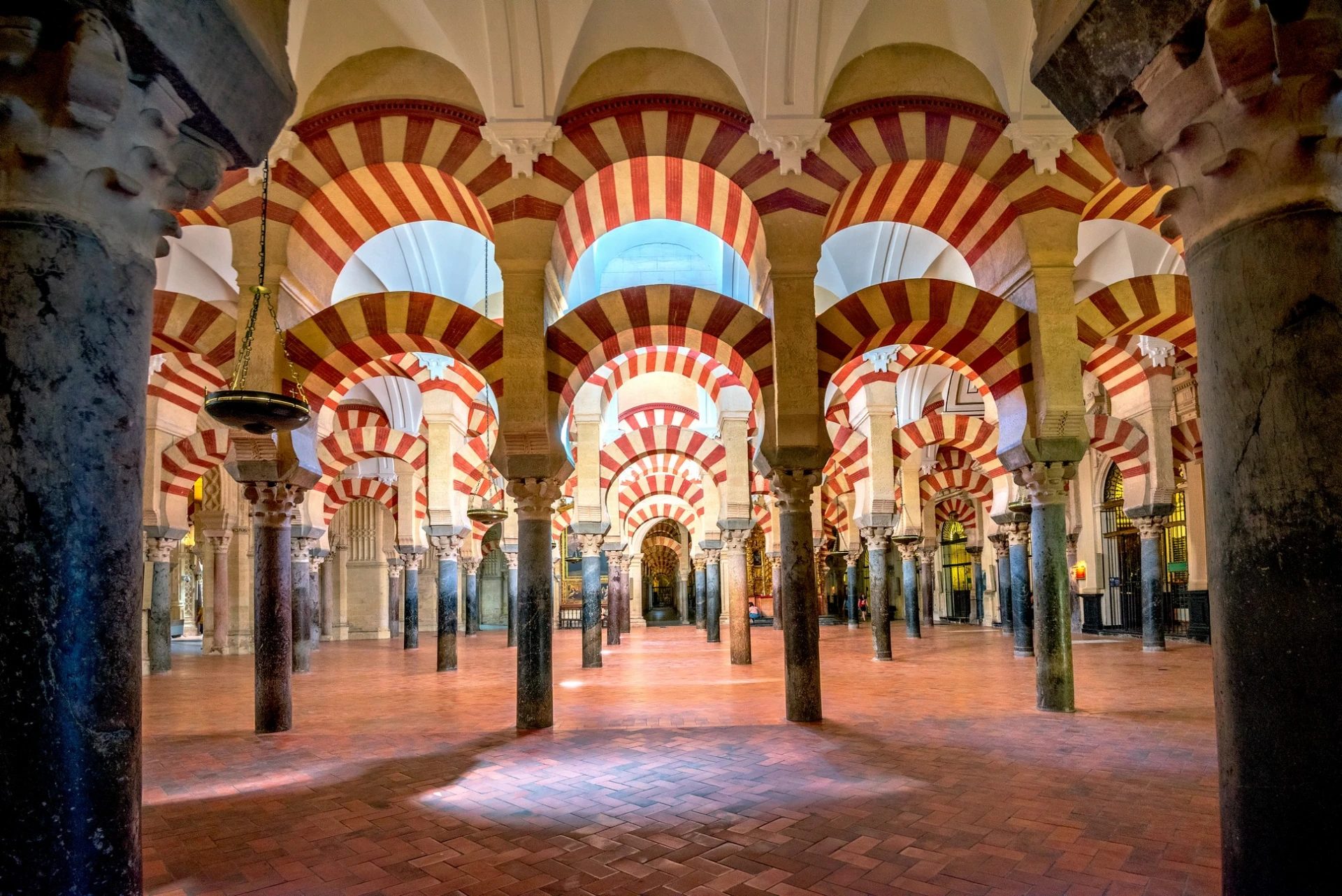
The Mezquita makes more sense once someone shows you where it changes. Abd al-Rahman I began it in 786, three later rulers enlarged it, and the columns, arches and ceilings shift with each phase. In 1523 a Renaissance cathedral was built in the middle of it. Our guides in Córdoba point out those seams, then follow the thread into the lanes of the Jewish Quarter, out to the excavated halls of Medina Azahara, or to a tavern for salmorejo, depending on what your party came for.
Cordoba, Your Way

The first choice is whether you share a guide or have one to yourselves. Small group tours come in from Seville on the high-speed train, with a guided walk through the Jewish Quarter and time on your own. Private tours are for your party only: the Mezquita and the Jewish Quarter, Medina Azahara with private transport, a tapas route or a morning in Montilla. Multi-day packages take care of hotels and transfers, and 7-Day Essential Andalusia From Córdoba links the city with Seville and Granada. Tailor-made trips are planned around your dates and interests from the start.

The Mezquita and the Jewish Quarter

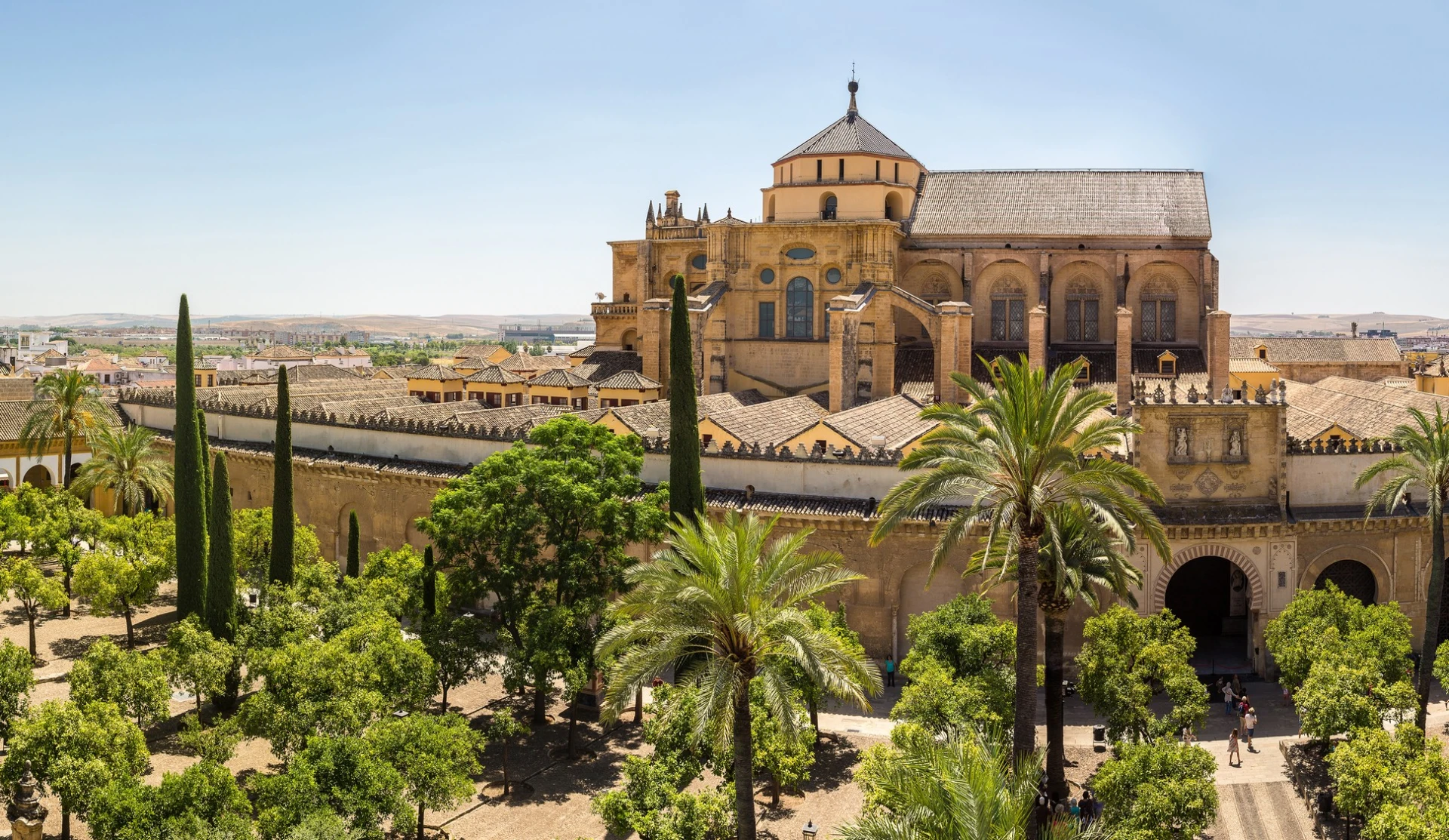
The private Mezquita and Jewish Quarter tour begins in the Patio de los Naranjos, under the old minaret, then goes inside to the forest of columns and the mihrab Al-Hakam II lined with Byzantine mosaics. Outside, the route turns into the Jewish Quarter's lanes and courtyards and ends among Roman columns the city reused long before either faith built here. For the caliphs' palace-city, the Medina Azahara private visit adds transport to the foothills of the Sierra Morena.

Cordoba Traditions & Culture

Córdoba's calendar peaks in May. The Cruces de Mayo fill its squares with flower-covered crosses in the first days of the month, then the Festival of the Patios opens private courtyards to visitors, many of them in the San Basilio and Santa Marina neighbourhoods. The month closes with the Feria de Nuestra Señora de la Salud. Outside May, the Palacio de Viana keeps its 12 patios open year-round.

Cordoba Food & Wine

Salmorejo, the thick cold tomato soup now served across Spain, is Córdoba's own, alongside flamenquín and rabo de toro. The private tapas route starts with sparkling wine on a rooftop facing the Mezquita, goes down to an underground wine cellar and ends with croquetas at a historic tavern. South of the city, Montilla-Moriles makes dry wines from Pedro Ximénez grapes, and the Montilla wine and olive oil tour pairs two estates with a tasting of local extra virgin oils.

Frequently Asked Questions
  • Why should I visit Córdoba?

Córdoba holds the clearest surviving monument of al-Andalus, the Mosque-Cathedral, together with a medieval Jewish Quarter, Roman remains and, just outside the city, the excavated palace-city of Medina Azahara. All of it sits within a compact old town on the Guadalquivir, small enough to cross on foot.


  • What tour formats are available in Córdoba?

The small group option is a day trip from Seville by high-speed train, with a guided walk through the Jewish Quarter and free time. Private tours, for your party alone, cover the Mezquita and Jewish Quarter, Medina Azahara with private transport, a rooftop and cellar tapas route, and a morning in the wineries of Montilla. The 7-Day Essential Andalusia package combines Córdoba with Seville and Granada, and a tailor-made itinerary is built around your own dates.


  • How many days do you need in Córdoba?

One full day covers the Mezquita and the Jewish Quarter. Two days leave room for Medina Azahara, which is closed on Mondays, and for either the Montilla wineries or an evening tapas route. Day trips from Seville or Madrid usually see the old town only.


  • When is the best time to visit Córdoba?

April, May, October and November are the most comfortable months. May brings the Cruces de Mayo and the Festival of the Patios. In July and August afternoon temperatures often pass 40°C, so sightseeing works best in the morning.


  • How do you get to Córdoba?

Most travelers arrive by high-speed train: about 1 hour 45 minutes from Madrid, 45 minutes from Seville and around an hour from Málaga. The nearest international airports are in Seville and Málaga. The train station is a short taxi ride from the old town.

Scroll to topScroll to top