Seville, Port of the Americas

Seville is the capital of Andalusia, in southern Spain, and from 1503 it held the Crown's monopoly on trade with the Americas through the Casa de Contratación. Its Cathedral, the largest Gothic cathedral in the world, holds the tomb of Christopher Columbus and was built over a 12th-century Almohad mosque whose minaret survives as the Giralda. The Cathedral, the Royal Alcázar and the Archivo de Indias were inscribed together as a UNESCO World Heritage Site in 1987. The Roman city of Itálica, birthplace of Emperor Trajan, lies about 9 km away, and high-speed trains reach Córdoba in about 45 minutes and Madrid in around two and a half hours.

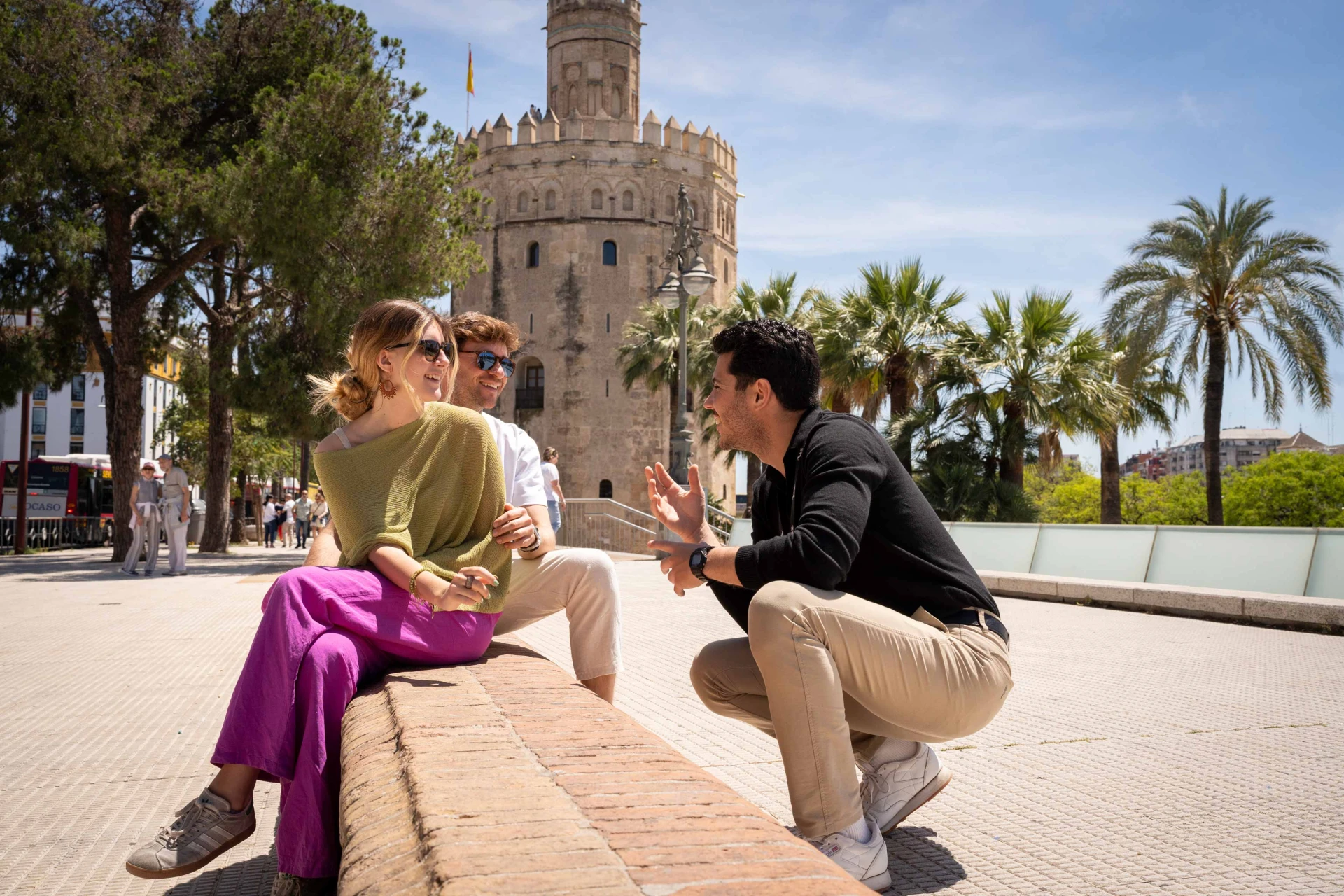
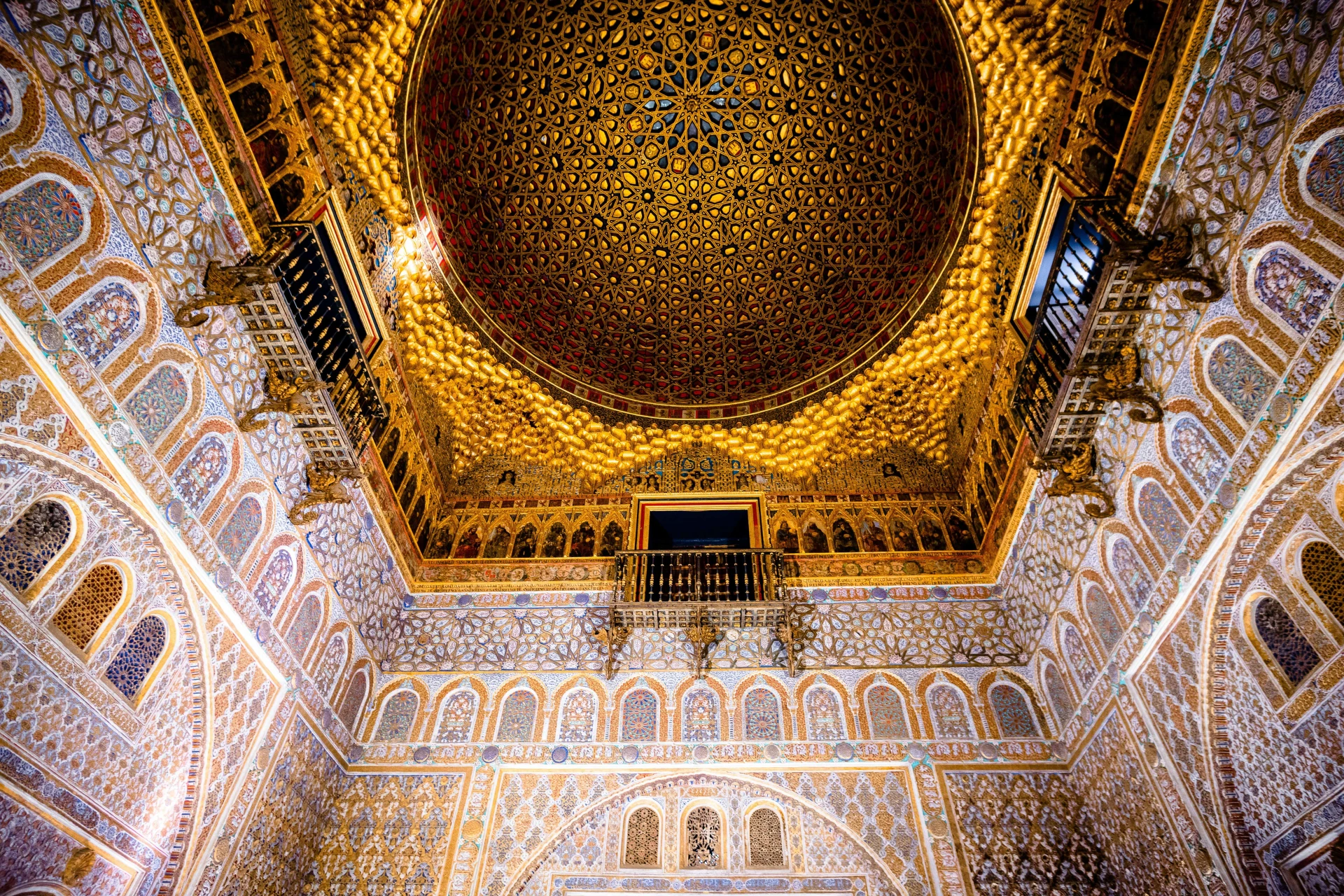
Pedro I's palace is covered in Arabic inscriptions because he built it in the 1360s with craftsmen trained in Islamic decoration. Next door, the Cathedral and the Giralda read as one site once you know how a mosque became a church. These are the connections our guides in Seville make as you walk, from the Alcázar's courtyards to the lanes of Santa Cruz and across the river to Triana, at the pace your group sets.

Seville, Your Way

Seville works in four formats. Small group tours run on fixed dates with other travelers, in the city and on day trips to Córdoba, Granada and Ronda. Private tours keep a set route but move to your schedule, with a guide for your party alone. Multi-day packages arrange hotels and transfers; Seville & The Sherry Coast adds Cádiz and a Jerez bodega in three days. Tailor-made itineraries are planned around your dates from the start.

Tell your guide what you came for, whether that's the Moorish palaces, the Americas trade or the city's kitchens, and the day bends toward it.

The Alcázar, Cathedral & Santa Cruz

The private morning tour covers Seville's three essential monuments in sequence: the Royal Alcázar, still an official residence of the Spanish royal family; the Cathedral, with the climb up the Giralda by ramp rather than stairs; and the lanes of Santa Cruz, the old Jewish quarter. Entry tickets are included, and you're back at your hotel by around 2 PM. For a longer day, the Game of Thrones walk adds the Roman ruins of Itálica.

Seville Traditions & Culture

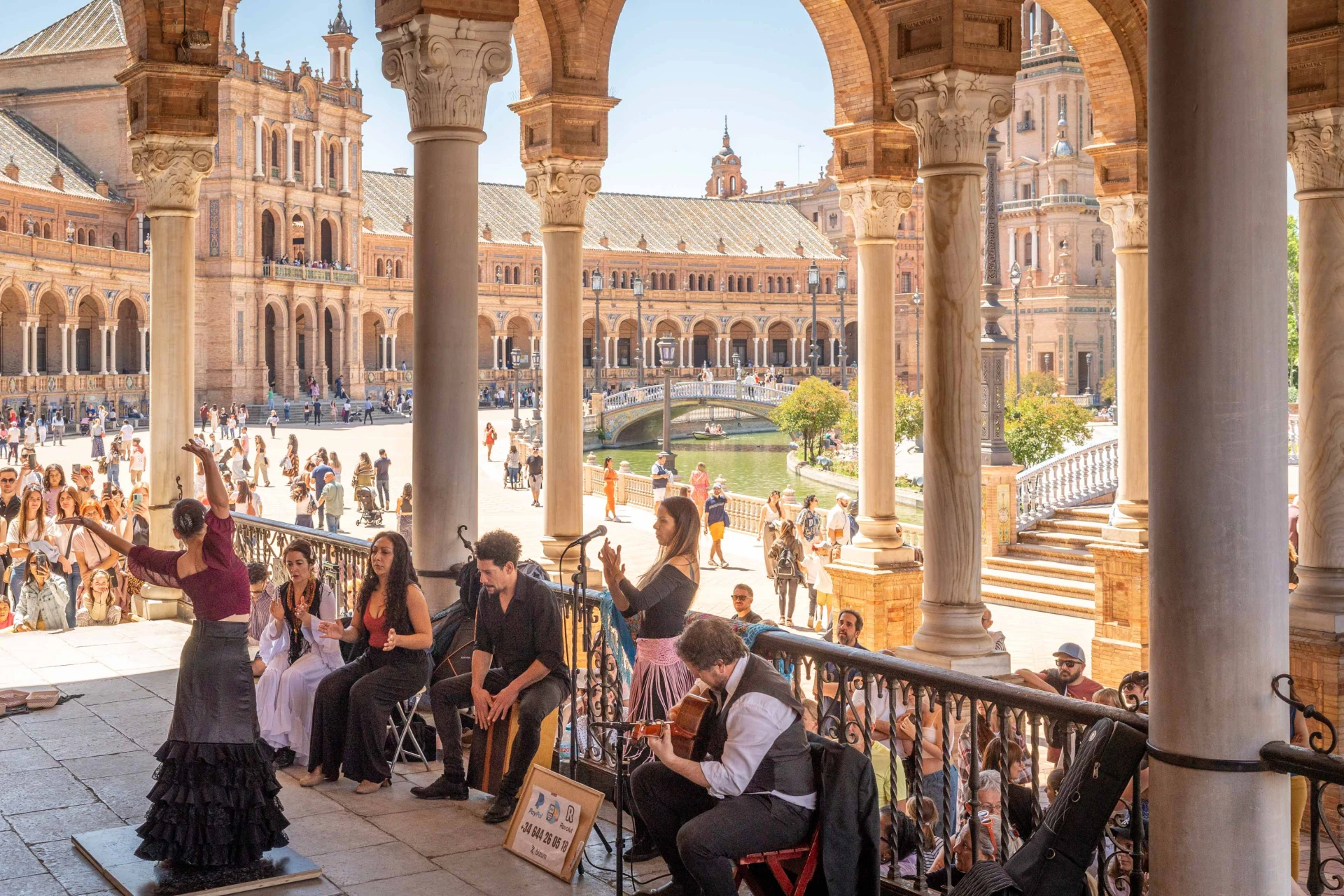
Flamenco, recognized by UNESCO in 2010, runs deep in Seville, and Triana, across the Guadalquivir, is where much of it took shape. The same neighborhood is known for glazed ceramic tiles, which you'll see on façades across the city and in the provincial alcoves of the Plaza de España. Come in spring for Semana Santa, when brotherhoods carry their floats through the old town, or for the Feria de Abril a couple of weeks later, when the fairground fills with casetas, sevillanas and horse carriages.

Seville Food & Wine

Seville eats in rounds: a tapa and a drink at one bar, then on to the next. Start with salmorejo, espinacas con garbanzos and jamón ibérico. Triana Market, built beside the ruins of the Castle of San Jorge, shows what the city cooks with, and two of the cooking classes begin there, including Triana Market & Paella on the Guadalquivir. For the glass, sherry comes from Jerez, about an hour south.

Frequently Asked Questions
  • Why should I visit Seville?

From 1503 Seville was the Crown's only port for trade with the Americas, and the wealth that came up the Guadalquivir built much of the city you see today. Its Cathedral, Royal Alcázar and Archivo de Indias form a single UNESCO World Heritage Site. Seville is also a center of flamenco and home to Andalusia's best-known spring festivals, Semana Santa and the Feria de Abril.


  • What's the difference between small group, private, package, and tailor-made tours in Seville?

Small group tours run on fixed dates with a limited number of other travelers. In Seville that means the city tour with a river cruise to Triana, plus day trips to Córdoba, Granada and Ronda. Private tours give your party its own guide on a set route, such as the Alcázar and Cathedral morning, but start when you choose and move at your pace. Package tours add hotels and transfers to the touring, like Seville & The Sherry Coast over three days. Tailor-made trips have no fixed route at all; they're built around your dates and interests. The local guiding is the same in every format. What changes is how much of the day you set yourself and who you share it with.


  • How many days do you need in Seville?

Two to three days cover the city itself: the Alcázar, the Cathedral and Giralda, Santa Cruz, Triana and the Plaza de España. Add a day for Córdoba, 45 minutes away by high-speed train, or for Roman Itálica. Seville & The Sherry Coast adds Cádiz and Jerez over three days, and our multi-day Andalusia tours combine Seville with Granada, Córdoba and beyond.


  • What's the best time to visit Seville?

Spring (March–May) and autumn (October–November) are the most comfortable months for walking the city. Seville's summers are among the hottest in Europe, with July and August regularly above 40°C (104°F), so plan sightseeing for the morning if you come then. Semana Santa and the Feria de Abril fall in spring and bring the biggest crowds.


  • How do you get to Seville?

Seville Airport (SVQ) is about 10 km from the center, with direct flights from major European cities. From the US, most travelers connect through Madrid or another European hub, or take the AVE high-speed train from Madrid in about two and a half hours.

Scroll to topScroll to top