Stay Inspired. Travel Further.
Join our newsletter and be the first to discover new tours, curated travel ideas, and exclusive experiences designed to inspire your next adventure

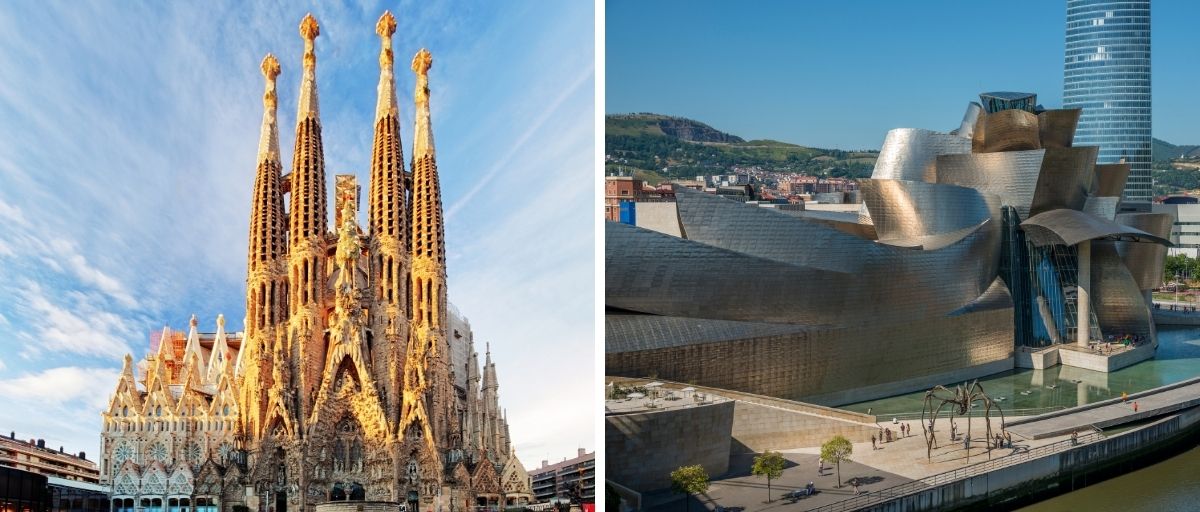
Antoni Gaudí and Frank Gehry never met. Nor could they have. One was born in the 19th century, the other continues to design buildings in the 21st century. Even so, for many travellers to Spain, both end up forming part of the same mental map.
Architects who are impossible to ignore. Cities that are better understood through their work.
If you are travelling from the United States and are interested in architecture, this intersection is almost inevitable. Barcelona and Bilbao. Curves, risk, technique, and a certain resistance to the straight line.
To talk about Barcelona is to end up talking about Gaudí. Not because he designed everything, but because he changed how the city explains itself.
Gaudí worked with stone, ceramics, iron, and light. Above all, he worked with time. His buildings cannot be understood at a glance. They require movement, patience, and acceptance that symmetry is optional.
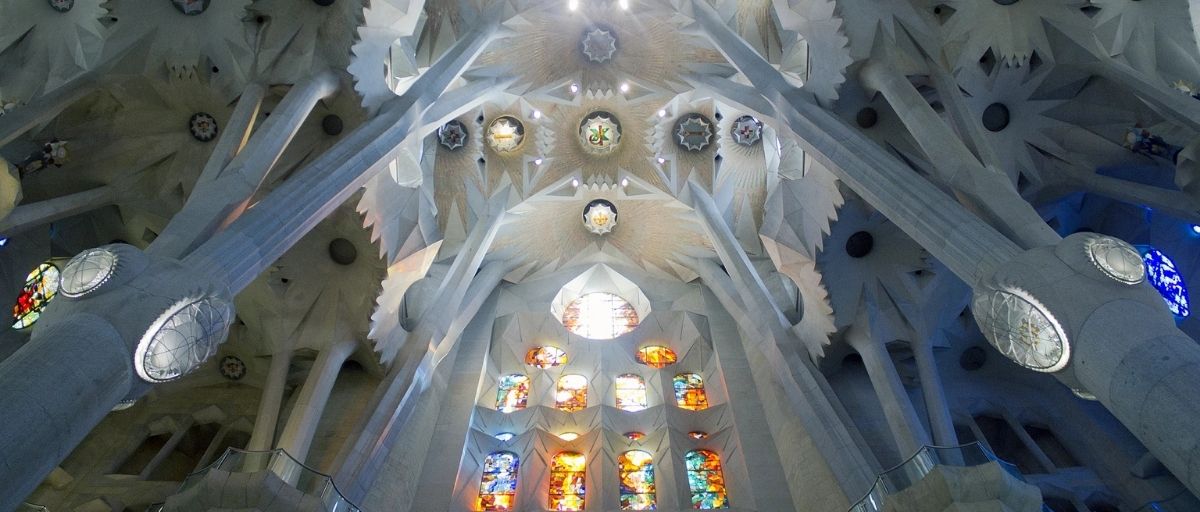
The Sagrada Familia is the clearest example. It is not just a church. It is a work in progress that has been under construction for more than a century. For many American visitors, the idea of an unfinished icon is unexpected.
Experiencing it through the Sagrada Familia with the Official Guide & Fast-Track Entry helps put that long timeline into context, explaining what has been completed, what is still to come, and why the unfinished state is part of the story.
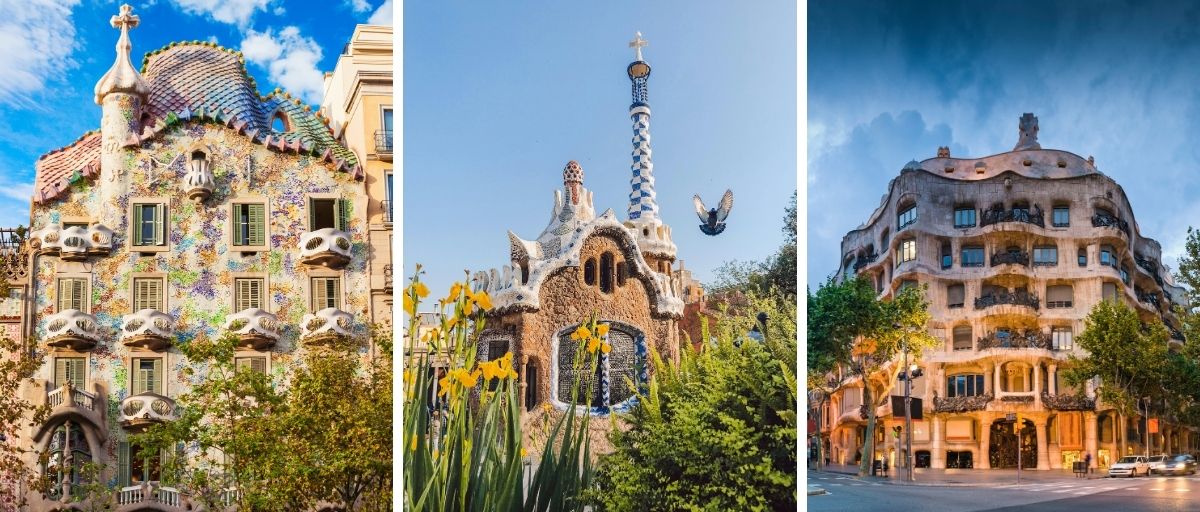
Park Güell, Casa Batlló, and La Pedrera do not aim to impress from afar. They reward proximity. Details accumulate. Small decisions build something strange and coherent at the same time.
If Gaudí builds by accumulation, Gehry builds by impact. The Guggenheim Museum Bilbao changed the city’s global position in a single gesture.
Before the museum, Bilbao was a city in transition, shaped by its industrial past. Afterwards, it became a global reference. Not only for the art inside, but for the building itself. Titanium, curves, and surfaces that react to the sky. Gehry prefers a clear before and after.
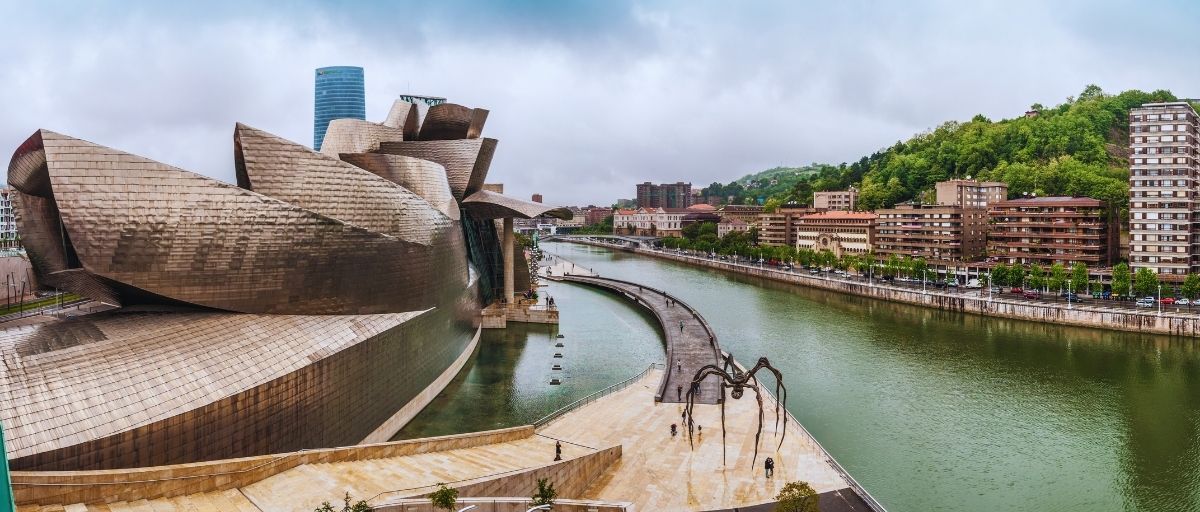
For many American travellers, the Guggenheim feels familiar in its logic. A contemporary icon. Immediate, identifiable, and easy to read. You enter, walk through, and leave with a clear sense of place.
Gaudí breaks rules from within. He studies nature, geometry, and structure, then reshapes them into his own system. Gehry breaks rules from the outside, pushing materials and volumes until the building becomes a sculptural object.
Both share one thing. Neither was designed to go unnoticed. Their work generates debate, admiration, and rejection. In architecture, that is usually a good sign.
For the traveller, the experience differs. Gaudí is discovered through repetition and movement. Gehry asserts himself immediately, even before you step inside.
Barcelona is a natural stop, and Gaudí fits easily into any itinerary. Bilbao requires a detour, but often proves worthwhile. Many travellers visit both cities to understand two architectural moments, separated by a century and united by ambition.
Seeing Gaudí and Gehry on the same trip is not an academic exercise. It is a practical way to understand how Spain has hosted some of the most daring ideas in modern architecture.

Enter your email to save experiences and access them anytime.
We will send a reset link to: